The deeptech inside IFA 2026’s consumer gadgets

Image: LG
LG says its latest refrigerator can learn when its door is usually opened and begin cooling up to two hours before it expects someone to arrive.
At IFA 2026 in Berlin, the smart home is no longer simply waiting for instructions. Appliances are beginning to observe conditions, interpret limited forms of context and alter their own operation. The result is a new generation of consumer technology built on systems more commonly associated with autonomous vehicles, industrial robots and medical devices.
Computer vision can identify clothes inside a washing machine. Biometric sensors can follow changes in heart rate. Algorithms can learn household routines, while AI agents attempt to coordinate several devices at once.
The deeptech trend emerging at IFA 2026 is the progression from connected appliances to machines that can sense, interpret and act. It suggests that a constrained form of physical AI is becoming a more prominent feature of consumer electronics. It is less dramatic than a humanoid robot, but considerably easier to commercialise, as well as potentially capable of reaching millions of homes.
Smart appliances begin with better sensors
Artificial intelligence in the home does not begin with a chatbot. It begins with a sensor.
LG’s new Fit & Max dishwasher uses a digital turbidity sensor to determine how much residue is suspended in its water. Its AI SenseClean system then adjusts the water temperature, detergent dose and cycle length. The company’s latest washer and dryer pair similarly uses AI Wash and AI Dry functions to detect fabric types and adapt their cycles.
Haier is adding computer vision to the process. Its Vision 15 washing machine uses an internal camera, sensors and algorithms to examine the contents and conditions inside the drum. It can detect factors including load size, balance and foam levels, identify mixed colours and notice whether clothing has become trapped. At IFA, the company demonstrated how it could warn its owner that a red sock had found its way into a white wash.
These features illustrate several distinct levels of machine intelligence that are frequently bundled together under the broad label of AI.
The simplest is sensor-based automation: a machine measures temperature, weight, water quality or movement and reacts according to predetermined rules. Computer vision adds the ability to classify what a camera sees. Predictive systems use previous patterns to anticipate an event, while an agentic system attempts to interpret a broader context and coordinate several actions or devices.
A dishwasher that adjusts its cycle according to water turbidity is therefore not doing the same thing as an AI agent planning a household routine. Both can reduce human intervention, but they differ significantly in complexity, autonomy and risk.
How industrial deeptech is entering the home
The technologies behind these AI-powered appliances were often developed or refined for more demanding environments.
Computer vision enables industrial robots to identify components on an assembly line and helps autonomous vehicles interpret their surroundings. In the home, a narrower application can distinguish a sock from a shirt or keep a moving pet within a camera’s frame.
Sensor fusion combines several imperfect measurements to create a more reliable picture of what is happening. An appliance might bring together optical, temperature, weight, movement and historical data rather than rely on a single reading.
Adaptive control then translates that information into physical action: changing the cooling level in a refrigerator, altering the movement of a washing-machine drum or modifying the temperature in a room.
Some machine-learning inference can increasingly be performed on a device or nearby smart-home hub. Research into edge AI shows why this is attractive. Sending data to a distant cloud platform can create network delays and privacy concerns, while local processing can allow faster responses and reduce the volume of sensitive information leaving the home.
Running sophisticated AI models locally is not straightforward, however. Consumer devices have limited processing power, memory and energy budgets. Researchers are consequently developing smaller models and methods for distributing inference across nearby edge devices.
Local processing could also keep important household functions working during an internet outage. Yet manufacturers do not always explain which features operate locally, which depend on the cloud and which use conventional automation rather than machine learning.
The relevant question is not whether a product carries an AI label. It is whether it can complete the loop of perceiving a physical condition, interpreting it and changing its behaviour.
Physical AI does not need to look like a robot
Physical AI is frequently discussed in the context of humanoid robots. Its earliest mass-market forms may prove far less spectacular.
A dishwasher operates in a tightly constrained environment. It does not need to understand the kitchen, navigate around children or learn how to pick up thousands of differently shaped objects. It only needs to interpret a limited set of signals and choose safely among a limited set of actions.
That narrowness is commercially valuable. General-purpose domestic robots still face difficult problems in perception, manipulation and safety. An intelligent refrigerator only has to manage refrigeration.
Smart thermostats and robotic vacuum cleaners have already used variations of this sense-decide-act loop for years. What is changing is the range of household objects acquiring these capabilities and the sophistication of the information they can interpret.
LG’s next step is to place a coordinating layer above individual products. Its new ThinQ Claw is a text-based AI agent designed to interpret intent and context, recommend recipes using grocery-purchase information and coordinate connected devices and services.
According to LG, users can tell the system about their plans through a chat interface rather than programming a complex set of automation rules. ThinQ Claw can then recommend or help initiate actions, such as preparing cooking appliances for guests or adjusting indoor conditions before someone returns home. The system was being demonstrated at IFA rather than announced as an immediately available consumer product.
That moves the concept from specialised appliance intelligence towards smart-home orchestration. Instead of every product making an isolated decision, one AI agent attempts to understand what the household wants and determine which devices or services should respond.
AI pet technology and smart beds extend domestic sensing
Domestic sensing is also expanding beyond the management of machines.
Petgugu is presenting an ecosystem that includes a self-cleaning cat toilet and a mobile robot designed to collect pet hair and interact with animals while their owners are away. Other IFA exhibitors, including PetSuper, are using AI-enabled pet cameras and connected products to monitor animals and turn routine observations into information about activity, feeding, hydration and possible changes in wellbeing.
The bedroom is becoming another sensing environment. BestQi’s AMADA Smart Adaptive Sleeping System combines an adjustable bed and mattress with app-controlled positioning, sound, vibration and separate settings for each side.
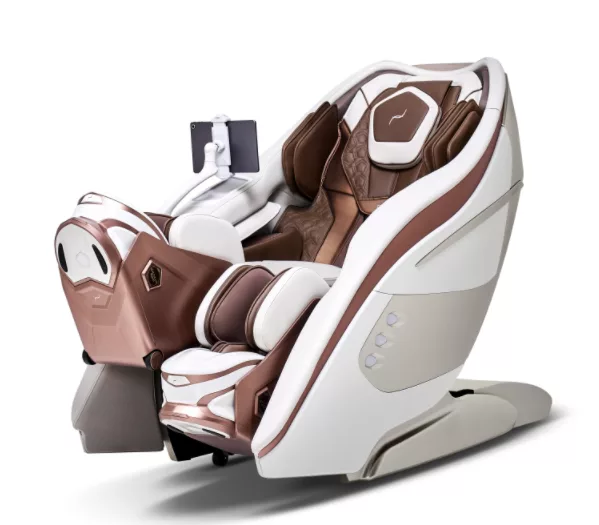
Bodyfriend’s Davinci AI massage chair goes further by incorporating a fingertip photoplethysmography sensor. The company says it uses measurements including heart rate, heart-rate variability and blood oxygen saturation to provide information about the user’s physical condition, stress and recovery.
This moves domestic technology into more sensitive territory. A washing machine can be tested on whether it cleans clothes correctly. A system interpreting the behaviour of an animal or the physical condition of a person is making a less easily verified judgement.
Products presented as wellness devices may also begin to resemble health technology without necessarily undergoing the same level of clinical validation. The question is no longer only whether the sensor works, but whether the meaning attributed to its measurements is reliable.
Why smart-home connectivity is not shared intelligence
The technical contest extends beyond individual appliances. Manufacturers are competing to control the layer through which household devices are managed.
The Matter smart-home standard is intended to make compatible connected products from different brands work together. Developed through the Connectivity Standards Alliance. It provides a common, internet protocol-based foundation for device communication and supports local connectivity.
That can make it easier for a light, thermostat or sensor from one manufacturer to work with another company’s platform. But connectivity is not the same as shared intelligence.
Matter may allow one system to switch another brand’s device on or change a supported setting. It does not automatically give an AI agent access to every product’s sensor data, predictive model or proprietary functions. Nor does it mean competing brands will allow one another’s agents to coordinate their appliances freely.
LG’s approach also draws on Homey, the cross-brand smart-home platform developed by Athom, which LG acquired in 2024. At IFA, LG demonstrated Homey connecting smart meters, solar panels, home batteries, electric-vehicle chargers and appliances to manage household energy generation, storage and consumption.
As AI moves into this orchestration layer, interoperability becomes partly a commercial decision. A company that controls the intelligence managing the home gains an ongoing relationship with customers long after an appliance has been sold.
That creates opportunities for maintenance services, automatic ordering, energy management and subscriptions. It also creates an incentive to keep the most advanced functions inside a proprietary smart-home ecosystem. The refrigerator could become an entry point into a platform rather than the end of a one-off hardware sale.
Who controls the AI-powered home?
The intelligent home raises questions that product demonstrations rarely answer. Can an appliance explain why it made a decision? Can its predictions be switched off? Can an owner inspect and delete learned routines? What continues to work if the manufacturer’s cloud service disappears?
The expected lifespan of appliances makes these questions especially pressing. A phone may be replaced after several years, but a washing machine, refrigerator or bed can remain in a home for a decade or longer. Software support, cybersecurity and access to cloud services must therefore be considered far beyond the initial sale.
Data ownership is equally important. A refrigerator learning when a household eats, a camera tracking a pet and a bed recording nightly routines could collectively produce a detailed account of life inside a home. Local processing can reduce exposure, but only when companies clearly disclose where analysis occurs and what information leaves the device.
IFA 2026 shows that the next stage of consumer technology will not necessarily arrive as one spectacular invention. It will appear piecemeal, inside familiar objects acquiring cameras, processors and limited powers of judgement.
Physical AI may enter the average home long before a humanoid robot does. It will arrive quietly, inside the washing machine that notices the wrong sock and the refrigerator that predicts when its door will open. The test is no longer whether an appliance can make a decision. It is whether the person who bought it can still understand, override and ultimately own that decision.
Further reading on MoveTheNeedle.news:
MTN Weekend: How to build a smart home that still works when the internet goes down
Beyond the gadgets: Six deeptech companies to watch at IFA 2026
MTN Weekend: How to build a private AI that never talks to the cloud