MTN Weekend: The wonderful world of weird consumer gadgets - then and now

The Sony Rolly crazy MP3 player was launched in 2007 (image by Sony)
A lollipop that plays music is an odd invention, and a coffee mug with video games is hardly less peculiar. But before we declare that consumer electronics have lost the plot, a brief visit to the family attic is in order.
In 2007, Sony launched Rolly, an egg-shaped audio device that rolled, flashed lights and moved its little side flaps to music. Listening to a song was apparently no longer enough; the speaker needed to enjoy itself too. Seen alongside a dancing music player, a lollipop with a soundtrack seems almost normal.
Lollipop Star and the history of unusual audio gadgets
Take the Bone Fone, marketed in 1979: a wearable radio that draped around the neck like a scarf, with a speaker at each end. Wearing your radio as an accessory was a bold contribution to personal entertainment, even before considering whether it went with your outfit.
Lollipop Star now takes audio somewhere more unexpected. The musical lollipop combines a hard-candy head with an audio module in the handle. When the candy makes contact with your teeth, vibrations travel through the teeth, jaw and surrounding tissue towards the inner ear, where they are perceived as sound.
That is the principle of bone conduction, rather than some newly discovered musical ability of the taste buds. The company sells artist-themed products, including a collaboration with R&B singer Mario, and announced a Coachella festival debut in April.
There is a pleasing absurdity to the idea: after decades of making personal audio smaller and more convenient, someone has made part of the listening experience edible.
PixelMug P1: the coffee mug has joined the entertainment industry
The PixelMug P1 brings that impulse to the coffee break, incorporating an LED pixel display into a porcelain mug. Through an app, users can customise graphics and animations, while the mug also offers scrolling text, temperature information and small games.
Temperature information has practical appeal, particularly if your coffee routine involves burning your tongue, waiting, becoming distracted and discovering the drink cold. However, the P1 measures temperature without actively maintaining it, so you can be entertained while the coffee continues its journey towards disappointment.
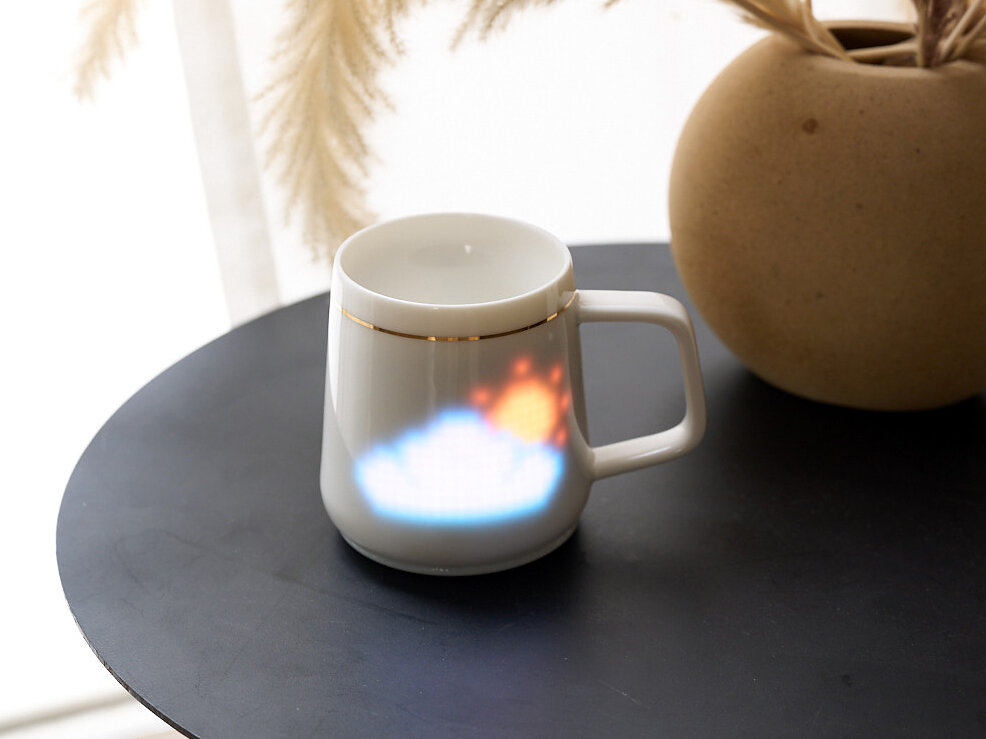
Even that combination of information and domestic decoration has precedents. By 2007, Chumby was putting internet widgets on a small touchscreen inside a soft, beanbag-like casing: news and weather had acquired something approaching upholstery. Nabaztag, the connected rabbit launched in 2005, delivered information through sounds, lights and moving ears, allowing a plastic animal on your desk to take an interest in the forecast.
The gaming mug belongs to this tradition of making technology personal, decorative and a little silly. We already buy mugs for slogans and improbable handles; giving that decorative impulse a software department is perhaps the predictable next step.
Seattle Ultrasonics C-200: even the knife needs charging
From personalised coffee cups, it is only a short journey across the kitchen to Seattle Ultrasonics’ C-200 ultrasonic chef’s knife, listed at $399 on the manufacturer’s US website.
Pressing a button makes its blade vibrate more than 30,000 times a second. Piezoelectric ceramics—materials that change shape slightly when electrically driven—produce the ultrasonic movement, which the company says reduces friction and sticking. It claims up to 50% less cutting force.
This is still a knife you guide through food, rather than a device that persuades carrots to arrange themselves, but easier cutting is a recognisable benefit. The unusual part is adding battery management to an object whose established requirements were washing and sharpening.
Fortunately, it remains usable as an ordinary knife without power, so dinner need not wait for a recharge. Whether the electronics earn their place depends on how much they improve everyday cooking: an impressive demonstration is enjoyable, but repeated usefulness gets the knife out of the drawer.
Dreame Halo: the lamp would like to do your hair
Dreame’s Halo takes the idea of household objects acquiring new talents beyond the kitchen. Shown as a concept at January’s CES technology exhibition, it combines hands-free hair drying with the appearance and lighting function of a curved floor lamp. Show coverage reported a proposed $700 price.
The living-room lamp, previously content to illuminate a book, has apparently retrained as a hairdresser.
In April, Dreame again described Halo as a concept product while announcing plans for US retail availability later in 2026. The company says its positioning system tracks the user’s head and adjusts airflow, allowing hair to dry while its owner reads or relaxes. That announcement establishes the ambition rather than confirming that the product is already widely available.
Holding a dryer can be tiring, and hands-free operation could help people who struggle to grip conventional models. The trade-off is finding floor space for an appliance previously kept in a drawer, and explaining to visitors why the chair beneath your elegant lamp appears to be receiving a blow-dry.
Roborock Saros Rover: the vacuum has a reasonable explanation
If the hair-drying lamp prompts a household negotiation, Roborock’s Saros Rover stair-climbing robot vacuum makes a more straightforward case for its unusual shape. Its articulated legs end in wheels, allowing the development model to lift its body onto steps and clean stairs.
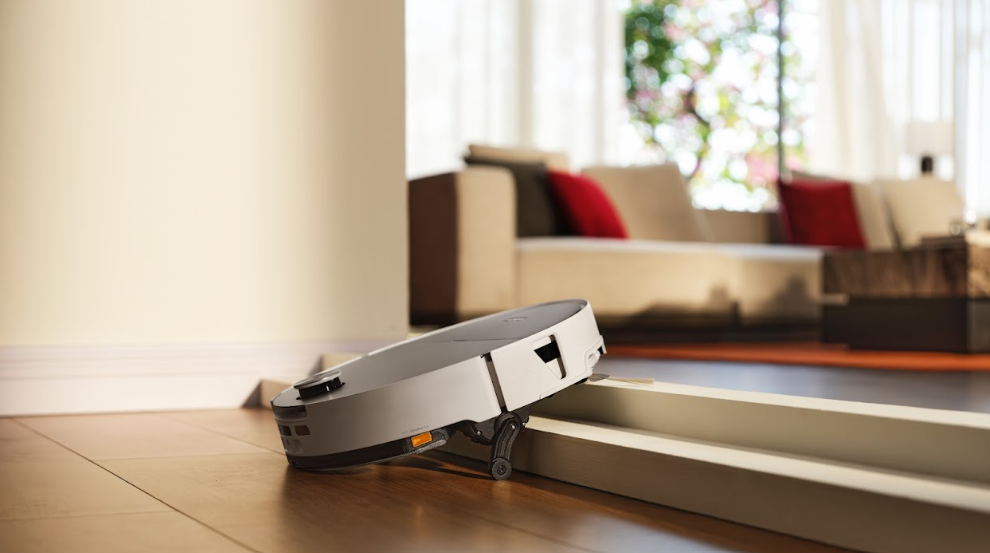
A vacuum growing legs looks extravagant until you consider how inconvenient stairs are for a machine expected to clean an entire home. Instead of requiring an owner to carry it between floors, the design aims to let it negotiate them independently. Roborock’s CES announcement described it as a product in development with an unconfirmed launch date; demonstrations leave questions about performance across different homes and eventual cost.
Augmental’s MouthPad offers an even clearer reason to look beyond appearances. This custom-fit device sits inside the mouth and enables computer control through tongue, head and breath gestures: a potentially wonderful thing for someone unable to operate a conventional mouse.
So our first laugh need not be our final verdict, especially when these experiments can provide anything from a moment’s amusement to access that a conventional device cannot offer.